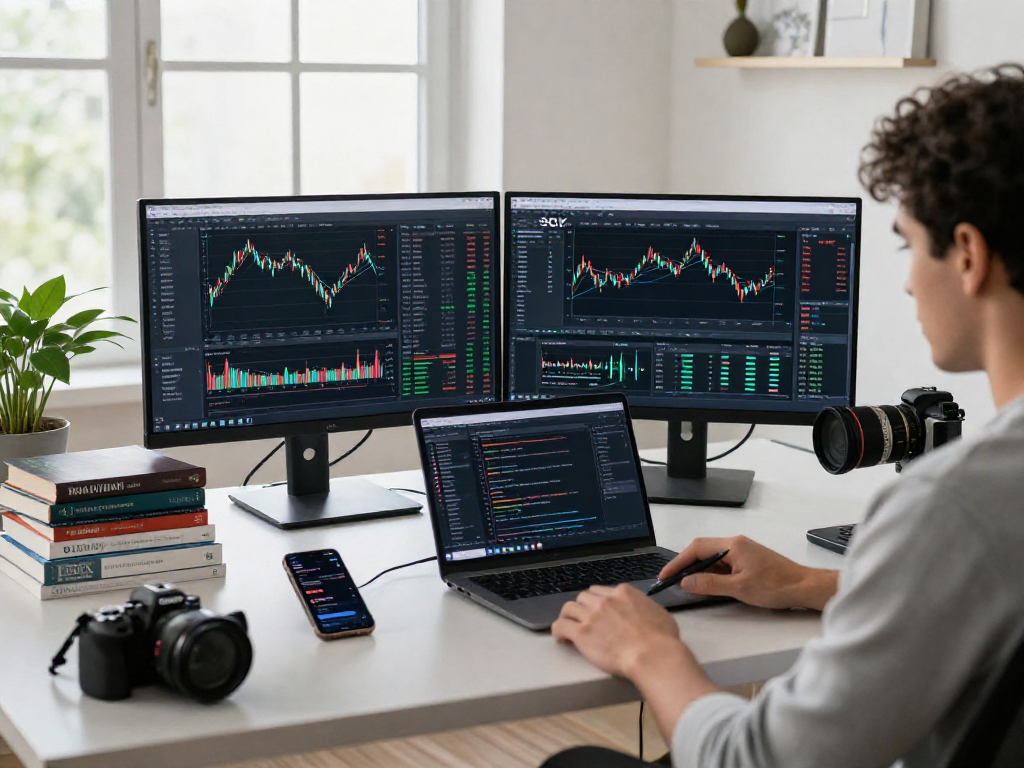
Understanding Tick Data and Its Importance in Crypto Trading
In the rapidly evolving world of blockchain and cryptocurrency, timely and precise market data is crucial for traders and investors alike. Tick data represents the most granular form of market data, capturing every individual trade (and in some feeds, every quote change) along with its price, size, and timestamp. This level of detail is indispensable, enabling traders to analyze market movements with a sharp focus, facilitating the execution of trades that generate profits. When exploring options, tick database solutions provide comprehensive insights necessary for data-driven decision-making.
Defining Tick Data and Its Role in Market Analysis
Tick data consists of real-time updates for each transaction occurring in the market. Unlike traditional aggregate data, such as OHLC (Open, High, Low, Close) which compacts time-sensitive information into broader categories, tick data maintains an individual record that preserves the exact sequence of events. This feature is vital for high-frequency traders and those engaged in algorithmic trading, as it allows for swift reaction to market changes, improving trading strategies and execution efficiency.
Difference Between Level 1 and Level 2 Market Data
Level 1 market data provides the basic information necessary for understanding current market conditions, including the latest bid and ask prices, as well as the last traded price for an asset. In contrast, Level 2 data goes beyond this by offering insights into the depth of the market, showing multiple layers of buy and sell orders across various price points. This adds critical context for traders looking to understand market liquidity and potential execution risks, significantly enhancing the ability to make informed trading decisions.
Tick Database: A Cornerstone for Algorithmic Trading Success
The implementation of a tick database is fundamental for successful algorithmic trading, as it provides the data granularity necessary to backtest trading strategies and to fine-tune algorithms. It also allows for the analysis of market microstructures which can uncover behavioral patterns and help traders optimize their strategies. Accessing a comprehensive tick database is essential not only for retrospective validations but also for real-time adjustments to maximize trading outcomes.
How to Stream Tick Data Effectively
Utilizing WebSocket for Real-Time Data Streaming
For a high-speed trading environment, WebSocket facilitates a bi-directional communication channel between a client and a server. This is especially valuable in the context of financial markets where milliseconds matter. By adopting WebSocket technology, traders can receive instantaneous updates on tick data without the need for continuous polling, ensuring that every piece of significant information reaches them promptly.
REST vs. WebSocket: Choosing the Right API for Your Needs
The choice between REST APIs and WebSocket APIs depends heavily on the specific requirements of the trading operation. REST APIs, while typically using a request-response model, work well for retrieving historical data snapshots, handling requests for tick history efficiently. Conversely, if the need is for continuous real-time updates, a WebSocket API would be the more suitable option, minimizing latency and ensuring prompt delivery of tick data.
Syncing Tick Data with Historical Price Analysis
Effectively synchronizing tick data with historical price analysis is crucial for developing robust trading strategies. By aggregating historical tick data with time-series analysis, traders can uncover trends and volatility patterns, which aids in formulating predictions. This approach significantly enhances the backtesting process and provides insights into future price movements, allowing traders to refine their hypotheses and optimize their performance.
Implementing Advanced Trading Strategies with Tick Data
Real-Time Monitoring: Maximizing Trading Efficiency
Real-time monitoring of tick data is imperative for maximizing trading efficacy. Utilizing algorithmic strategies that react to market changes as they occur ensures that traders can capitalize on short-lived opportunities. Implementing sophisticated analytics tools that interpret tick data in real time can provide traders with a competitive edge, facilitating quicker entry and exit points.
Creating Custom Trading Algorithms with Tick Data
Leveraging detailed tick data allows traders to design custom trading algorithms tailored to their specific strategies. These algorithms can be programmed to respond to intricate patterns distilled from tick data, enabling automated trading that executes orders at optimal prices. The flexibility achieved through developing personalized algorithms empowers traders to adapt quickly to market conditions while maintaining strategic control.
Depth of Market Understanding through Tick Analysis
Engaging in tick analysis provides deep insights into market depth and liquidity. By examining the order book’s dynamics, traders can gauge the supply and demand at various price levels, leading to improved decision-making. Understanding the depth of market allows traders to anticipate potential market movements, enhancing their strategic positioning amidst price fluctuations.
Data Security and Compliance in Cryptocurrency Trading
Protecting Your Assets: Security Best Practices
In the realm of cryptocurrency trading, security should always be a priority. Adopting best practices such as utilizing hardware wallets for storage, implementing two-factor authentication (2FA), and maintaining vigilance against phishing attacks can significantly enhance asset protection. Additionally, remaining aware of the ever-evolving security landscape will help you preempt potential vulnerabilities associated with crypto trading.
Understanding Compliance and Regulatory Considerations for 2026
With the landscape of cryptocurrency continually shifting, understanding compliance regulations is critical in ensuring lawful operations. In 2026, the emphasis on adhering to AML (Anti-Money Laundering) and KYC (Know Your Customer) requirements will be paramount as regulators strive to create a secure trading environment. Keeping abreast of local and international regulations will enable traders to navigate compliance without jeopardizing their trading activities.
Managing Tax Implications of High-Volume Trading Activities
High-volume trading activities can lead to complex tax implications that traders must proactively manage. Understanding the tax treatment of cryptocurrency transactions and ensuring proper reporting practices are essential to remain compliant. Consulting with a qualified financial advisor is advisable to navigate potential liabilities and ensure all trading transactions are accounted correctly, aiming to avoid penalties associated with tax misreporting.
Future Innovations in Tick Data and Market Analytics
Emerging Technologies in Cryptocurrency Trading
As technological advancements deepen their imprint on the financial landscape, innovations such as AI-driven trading algorithms, machine learning techniques, and big data analytics are anticipated to revolutionize trading strategies. Developing systems informed by these technologies can provide unparalleled analytical capabilities, optimizing the effectiveness of trading decisions.
The Rise of Decentralized Finance (DeFi) and Its Impact on Tick Data
The expansion of DeFi projects has transformed how traders access market data and interact with financial markets. By utilizing decentralized exchanges that rely on tick data, users are endowed with a plethora of options for liquidity provision, lending, and trading without reliance on centralized authorities. This transformation necessitates a new focus on how tick data is structured and accessed.
Predicting Future Trends: Tick Data in Blockchain Evolution
As blockchain technology continues to evolve, the utilization of tick data will expand in numerous ways. From improving market efficiency and transparency to streamlining trading processes, the implications of sophisticated tick data analytics will reshape how trading is executed in the blockchain landscape. Investing in these technological enhancements will be critical for traders looking to maintain competitive advantages.
What is tick data?
Tick data refers to the most granular financial data capturing the exact details of every transaction that occurs across various markets. This includes essential attributes such as price, volume, and timestamps which play a pivotal role in market analysis.
How do I choose the right tick database for my needs?
Selecting the appropriate tick database involves considering factors like data coverage, update frequency, ease of integration with existing systems, and, crucially, the specific trading strategies you intend to employ.
Why is live market data crucial for day trading?
Live market data is imperative for day trading since it enables traders to respond to market shifts in real-time, allowing them to capitalize on opportunities and mitigate losses rapidly, a necessity in high-velocity environments.
What security measures should I implement for trading?
Implementing robust security measures entails employing hardware wallets, utilizing strong passwords, enabling 2FA, and remaining discreet about sensitive information such as private keys or seed phrases.
How will regulatory changes in 2026 affect tick data usage?
Regulatory changes in 2026 will likely impact the usage of tick data by imposing stricter compliance and reporting requirements, compelling traders to adapt their methods and practices to align with new legal standards.